How to Become a Bathroom Fitter in the UK: The Multi-Trade Route to £200–£460 Day Rates
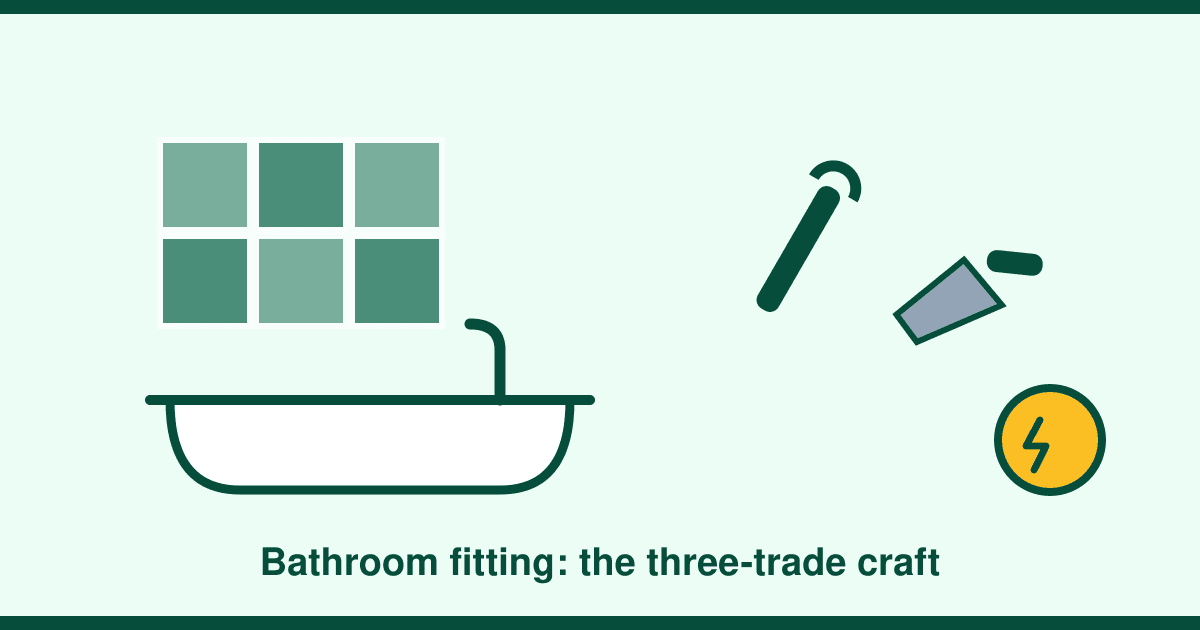
The bathroom fitter is the trades' great generalist: plumber for the morning, tiler after lunch, coordinator of the electrician by phone — one professional carrying a whole room from strip-out to silicone. That breadth is the barrier and the business case: fewer people master it, and customers pay for one accountable trade instead of four. Here's the honest 2026 route in.
In short: The working profile is multi-trade — plumbing plus tiling plus basic electrics — reached by four routes: 10-day intensive multi-skill courses, the Plumbing & Domestic Heating Level 3 apprenticeship (four years; 95% government-funded for smaller employers), part-time college (2–3 years), or on-site NVQ portfolio assessment for the already-experienced. Day rates: £200–£320 nationally, £300–£460 in London and the South East.
The four routes in
| Route | Time | Suits |
|---|---|---|
| 10-day intensive multi-skill course | 2 weeks | Career changers wanting fast, practical entry — foundations plus layout and finishing |
| Level 3 apprenticeship (Plumbing & Domestic Heating) | 4 years, paid | School leavers; 95% government co-funding for smaller employers |
| Part-time college | 2–3 years, alongside work | Steady-route learners keeping current income |
| On-site NVQ assessment | portfolio-based | Experienced-but-unqualified fitters — assessed on live jobs, no classroom |
The honest note on intensives: ten days builds foundations, not mastery — graduates typically spend a year or two working alongside established fitters or on simpler refits before flying solo on full renovations. Every route benefits from the same apprenticeship-by-stealth.
The skills stack (and its legal edges)
- Plumbing: the core — first fix, sanitaryware, wastes. The G3 unvented hot water certificate (£300–£450) is the classic add-on that unlocks cylinder work.
- Tiling: where the visible quality lives — walls, floors, and the wet-room tanking discipline that separates professionals from leak-makers.
- Electrics — know the line: bathroom electrical work sits in Part P special-location territory; the fitter's job is competent coordination of certified sparks, not substitution — exactly the legal boundary customers are taught, and quoting it correctly is a mark of professionalism, not weakness.
- The quiet skills: waterproofing detail, silicone finishing, and sequencing — the choreography of a full refit is half the craft.
The business the skills buy
- Day rates: £200–£320 nationally, £300–£460 London/South East (£180–£300 across the wider market) — multiplied by the fixed-price project work most established fitters actually sell.
- The demand base: bathrooms renovate on a 15–20 year cycle regardless of economy, and what customers pay for the whole job shows the project sizes a solo fitter quotes.
- The accessibility seam: an ageing population converts bathrooms continuously — VAT-relieved adaptation work is a steady, meaningful niche.
- The retailer pipeline: bathroom showrooms perpetually need reliable installers — the classic route to a full diary without marketing spend.
Tool and van honesty: the multi-trade kit is broader than any single trade's — plumbing tools, tile cutters, and the consumables of both. Build it job by job, and let the first year's sub-work fund the van fit-out; the trade rewards patience over upfront spending.
The bottom line
Pick the route your finances allow — intensive plus mentored year, or the funded apprenticeship — stack plumbing, tiling and the G3, respect the Part P line, and let showroom relationships fill the diary at £200–£460 a day. Three trades in one room is the hardest easy living in construction. For homeowners on the hiring side: find vetted bathroom fitters near you here.
Frequently asked questions
Four routes: a 10-day intensive multi-skill course (fast practical entry), the four-year Plumbing & Domestic Heating Level 3 apprenticeship (95% government-funded for smaller employers), part-time college over 2–3 years, or on-site NVQ portfolio assessment for experienced fitters. All build the same multi-trade profile: plumbing, tiling and basic electrics.
Day rates run £200–£320 nationally and £300–£460 in London and the South East (£180–£300 across the wider market) — with most established fitters selling fixed-price projects built on those rates. Showroom installation pipelines keep diaries full without marketing spend.
Only within strict limits — bathroom electrics are Part P special-location work requiring certified electricians for notifiable jobs. The professional fitter coordinates the spark rather than substituting for one, and quoting that boundary correctly is a recognised mark of quality.
The G3 unvented hot water certificate (£300–£450) qualifies you to work on unvented cylinders — a frequent component of bathroom and heating upgrades. For a working bathroom fitter it pays for itself quickly and widens the jobs you can quote whole.