How long does a bathroom renovation actually take?
Anyone who has watched a home renovation show could be forgiven for thinking a bathroom comes together in a weekend, but a genuine full refit involves a fixed sequence of trades that each need time to do their job properly, plus drying time in between that can't really be rushed. Knowing what that sequence actually looks like makes it much easier to judge whether a quoted timeline is realistic.
At the simplest end, a like-for-like sanitaryware swap — replacing a toilet, basin and bath or shower in exactly the same positions, with no structural or tiling changes — can genuinely be done in a day or two by an experienced fitter. That's the exception rather than the rule, though. A full strip-out and refit, including new tiling and some repositioning of fittings or pipework, commonly takes around three to four weeks on site from first day to final handover. At the more involved end, a renovation with bespoke fixtures, underfloor heating, large-format or natural stone tiling, or genuine structural changes can stretch to around ten to twelve weeks once design time and material lead times are included alongside the physical build.
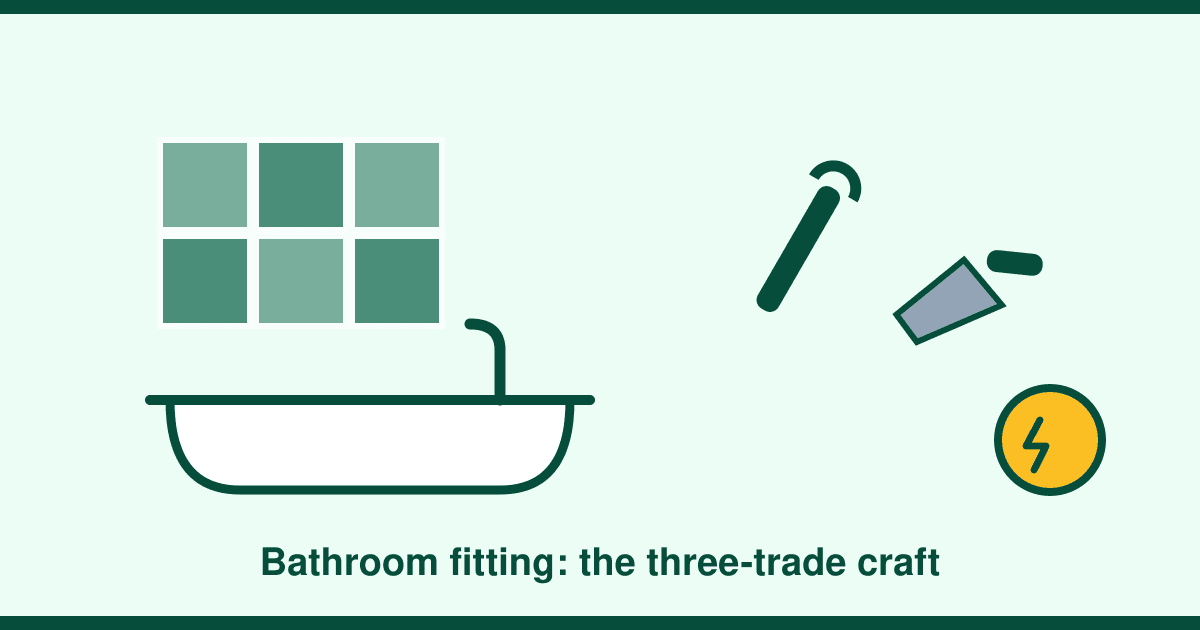
The standard order of trades follows a logical sequence that's worth understanding, partly because it explains why a fitter can't simply "start tiling" on day one even if the tiles are sitting in the hallway. Work typically begins with strip-out — removing the old suite, tiling and, where needed, flooring — followed by first-fix plumbing and electrics, where new pipework and cabling are run to their final positions but not yet connected to fittings. Plastering comes next, patching or re-skimming walls disturbed by the first-fix work. Tiling follows once the plaster has had time to dry. Second-fix work then follows the tiling — installing the actual suite, taps, shower fittings and any electrical accessories — and the job finishes with sealing around the bath, shower and basin, and final testing of plumbing and electrics before sign-off.
Drying time is one of the most common places a timeline gets compressed in a rush and then causes real problems later. New plaster commonly needs around seven to fourteen days to dry properly, ideally reaching below roughly 0.5% moisture content, before tiling can safely go on top of it. Tiling onto plaster that's still damp is a commonly cited cause of adhesive failure and mould developing behind the tiles — a problem that isn't visible until tiles start coming loose or discolouring, by which point the fix means ripping the tiling back out. A fitter or builder who proposes skipping or drastically shortening this drying window to hit a deadline is cutting a corner that tends to cost more to fix than the time it saved.
Material lead times are the other major factor that extends timelines beyond the on-site build itself, and they're worth planning for before booking a start date rather than discovering mid-project. A bespoke, made-to-measure shower screen commonly has a lead time of around three to six weeks from templating to delivery. A custom-built vanity unit can take around four to eight weeks. Natural stone tiles sourced from a specific quarry or supplier commonly take around three to six weeks to arrive. None of this is unusual, but a project that starts strip-out before these items are confirmed on order, or worse, before they've even been chosen, risks a bathroom sitting mid-renovation — unusable — for weeks longer than the physical labour alone would require.
The practical takeaway that most installers and planning guides agree on is to finalise the layout and place orders for the suite, tiles and any bespoke items before any strip-out work begins, rather than designing as you go. A project where materials are confirmed and on site, or at least on a known delivery date, before the first wall comes down tends to run to something close to its quoted timeline; a project where decisions are still being made once work has started is the single most common reason a "three to four week" job stretches out considerably longer.
Frequently asked questions
A full strip-out and refit, including new tiling and some repositioning of fittings, commonly takes around three to four weeks on site; a like-for-like swap can be done in a day or two, while a bespoke or structurally complex renovation can stretch to around ten to twelve weeks including design and lead times.
The typical sequence is strip-out, then first-fix plumbing and electrics, plastering, tiling, second-fix installation of the suite and fittings, and finally sealing and testing — each stage generally needs the previous one finished, and in the case of plastering, properly dried, before it can start.
New plaster commonly needs around seven to fourteen days to dry, ideally below roughly 0.5% moisture content, before tiling; tiling onto damp plaster is a commonly cited cause of adhesive failure and mould developing behind the tiles later on.
Material lead times are a common culprit — bespoke shower screens commonly take around three to six weeks, custom vanity units around four to eight weeks, and specific natural stone tiles around three to six weeks — so starting strip-out before these items are confirmed on order is a frequent cause of a project overrunning.